KrisTech offers a comprehensive line of wire and cable products engineered for performance and reliability across every application.

Supply Chain
By Gino Geruntino | Reviewed By Marcus Tagliaferri
Could a Strong El Niño Season Damage the Supply Chain?
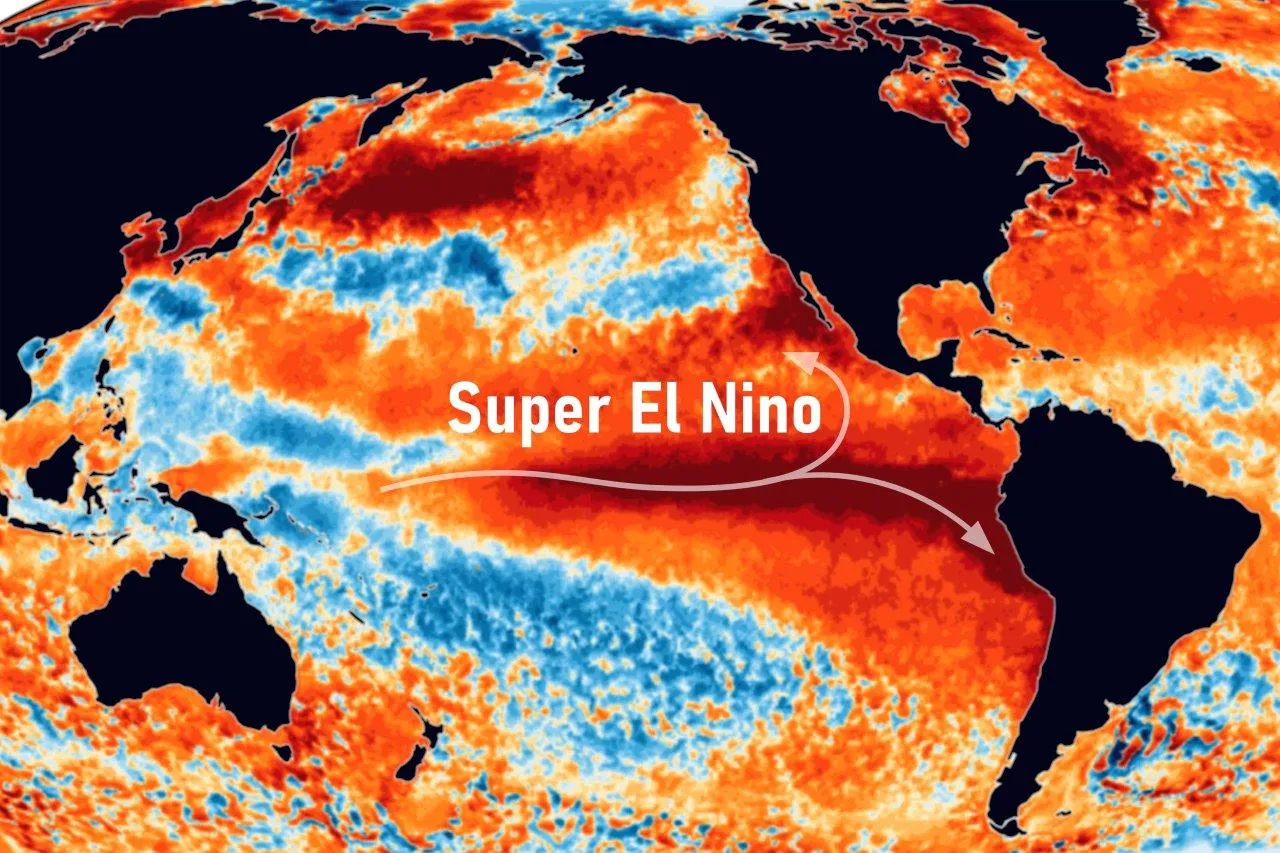
Like most of America, our eyes are fixed on the Pacific Ocean as we wait to see what the winter season might bring.
According to both the Climate Prediction Center (CPC) and AccuWeather, there is a high chance of a strong El Niño this winter. Meaning “the little boy” or “the Christ Child” in Spanish, El Niño events occur every few years when warmer oceans release heat into the atmosphere. They're also the opposite of the La Niña weather phenomenon, which occurs less frequently and involves colder-than-usual ocean temperatures.
When El Niño events happen, they do more than upset winter activity lovers. Rising Pacific Ocean heat changes the entire global climate, including in the United States. The result is drier, warmer winters for northern states, and more precipitation in southern ones.
But a milder winter doesn't exactly mean less snow or more rain. In some cases, precipitation doesn't change much, but storms could become more severe. For the U.S., it may mean snow delays and flooding, but the effects stretch far beyond our own backyard. Globally, El Niño conditions can change everything from crop production and mining to shipping lanes.
With this year's El Niño projected to be one of the strongest on record, what does it mean for the global supply chain? More importantly, what can businesses do to stay ahead without too much undue risk?
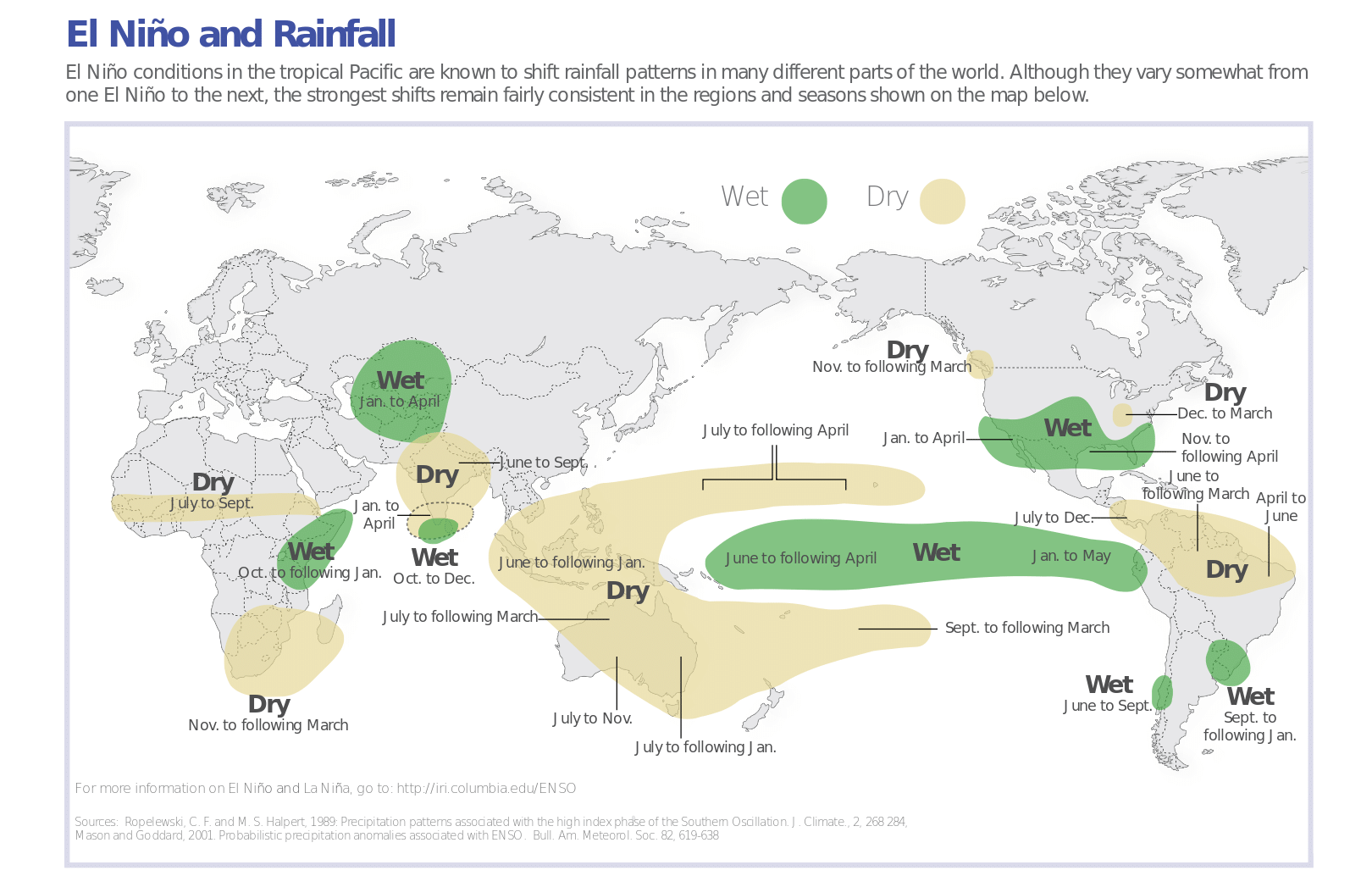
El Niño Hits Regions Differently
Because El Niño is a global phenomenon, it presents drastically different effects at different times of the year.
During an El Niño cycle, some regions may undergo drought conditions while others are inundated with rainstorms and other precipitation. In the U.S., El Niño can move the Pacific Jet Stream, shifting winter storms south while some northern states become drier and calmer.
Although we often hear about El Niño cycles during the winter months, its duration is a moving target. Events typically start in spring, then intensify during the summer months and into fall. By November, an El Niño system enters its peak and remains strong into the next year. From there, the system gradually decays, slowing down over a few months.
Usually, cycles last 9 to 12 months, though stronger systems can impact weather for 18 months or more. During this time, El Niño may drastically impact shipping routes, raw materials, and other parts of the chain.
Everything is Affected
El Niño systems can upend the global supply chain, hitting some industries incredibly hard.
Droughts could impact crucial shipping lanes, forcing cargo ships to carry fewer or lighter shipments or find alternate routes. Nowhere is this truer than the Panama Canal, which has experienced several severe droughts because of El Niño.
This year, Panamanian officials are preparing for a situation like 2023, when a historic El Niño drought reduced water levels at Lake Gatun to dangerously low levels. In early September, Panama Canal officials reduced daily traffic from 36 to 34 passages, then further reduced it to 32 across its Neopanamax lock and Panamax locks. This is the first time since 2023's drought that the passageway has had to limit traffic.
Fortunately, on October 15, the Panama Canal Authority (ACP) increased traffic to 33 daily passages, thanks to rainfall and water-saving techniques. Keep in mind, the ACP continuously adjusts limits based on real-time watershed metrics.
El Niño Disrupts Shipping and More
Less traffic moving through critical shipping lanes typically means longer shipping times, but it's not the only issue.
With fewer ships passing through the Panama Canal, shippers and importers must pay more for an open slot as competition rises.
If shippers don’t want to pay higher costs or can wait longer for materials or finished goods, they can skip the canal entirely and travel around South America. Though it's an easy solution, the new route is much longer than slipping through the Panama Canal and adds weeks to a trip.
Depending on the market and industry, longer shipping times often mean production delays, higher shipping costs, and even lost sales.
“When a major shipping lane loses capacity, the impact goes beyond ocean freight," KrisTech's Director of Supply Chain, Marcus Tagliaferri, said. "Longer transit times and higher costs can ripple through inventory plans and production schedules. Supply chains need to plan for the full operational impact, not just the freight rate.”
Impact on Raw Materials: Copper Supply Risks in South America and Africa
El Niño could heavily impact Chile and Peru, two of the world's largest copper producers.
Both South American countries face flood and mudslide risks caused by increased precipitation. More rain may impact mining operations, including rail and road infrastructure to move people, equipment, and copper ore. Mining companies may temporarily reduce output if heavy rains and flooding are bad, crunching global supplies.
But flooding isn't just bad for business; heavy rains hurt people, too. Flooding kills crops and spreads disease, while storms can ravage lands that aren't used to heavy or frequent rain. If water can't properly seep into the ground, washouts can shut down roads, limiting traffic until conditions improve.
In Africa, drought is a legitimate concern for copper-mining countries like the Democratic Republic of Congo (DRC) and Zambia. Droughts wreak havoc on everything from local economies to entire industries.
For example, less water for crops and animals may lead to malnourishment or death. During an extreme drought, we could see food shortages and water rationing, lost commercial revenue, and reduced GDPs for affected countries.
Countries with developed hydropower systems also struggle during droughts, forcing them to generate power using more expensive diesel power to fill gaps. Switching to diesel and other fossil fuels to power mining, smelting, and other processing isn't just an added cost, though. As companies burn more fossil fuels, they're also causing environmental damage.
Disruptive Weather Causes Trouble in the U.S.
Domestically, we have to keep a close eye on how El Niño systems will likely impact both the general and copper supply chains.
As noted earlier, warmer seawater brings wet weather to the Southern U.S., making it harder to move freight by rail and road. Storms may also hamper critical shipping routes and ports, spiking shipping costs, creating delays, and forcing distributors to hold additional stock.
“Inventory can provide an important buffer against disruption, but it needs to be intentional," Tagliaferri explained. "Companies shouldn't focus solely on carrying more inventory. Rather, they should put their effort and time into carrying the right inventory.”
If there's one silver lining for those living in the northern U.S., particularly along the Great Lakes, it might be that milder, warmer winter weather could lead to lower heating costs. We might see lower energy rates, though the energy industry may have to adjust its supply-and-demand dynamics.
For the copper supply chain, the U.S. network isn't as critical as the global one. Roughly 57% of refined copper used domestically is imported from other countries, many of which also contend with El Niño’s weather pattern changes.
If the upcoming cycle reduces global mining capacity, supply drops. That means higher market costs as competition increases for a narrower supply. Shippers may also face more delays and costs if canals and other shipping routes limit travel or face other concerns.
American copper importers must now fight two battles at once. First, they must navigate higher raw material prices caused by lower supply. Once they’ve addressed that problem, they either pay higher shipping costs or face shipping delays, neither of which is welcome.
Keeping an Eye on El Niño
Not every El Niño system is the same, but the 2026-2027 system has a good chance of becoming very strong.
“Supply chain resiliency involves more than trying to predict every disruption," Tagliaferri said. "It’s about understanding where you are exposed and having options when conditions change.”
The best things any business can do to protect itself, regardless of industry, are:
- Diversify your partners and network to avoid delays or shortages
- Carry a little extra inventory to weather price hikes or shipping delays
- Keep an eye on NOAA predictions and tracking, and attempt to avoid shipping routes in areas that could be most impacted
We've seen strong El Niño cycles before, including in 2015-16 and 2023-24, which experts call some of the strongest on record.
But companies don't necessarily need to fear the weather or hunker down to protect themselves; they should prepare. Failing to prepare for the worst could mean leaving money on the table, either through higher shipping and product costs or empty shelves.
-
Essential Electrical Safety & Compliance Resources for Electricians
-
Dissecting the 2026 Trucking Industry Landscape
-
Supply Chain Management: Lessons and Realizations
-
Common Wire Types Used in Data Centers
-
Supply Chain Roundup: Trending Topics from 2026 So Far
-
Can Companies Temper Supply Chain J-Curves?